Successful Payment Reminders (Mahnung): Tips, Rules, and Templates for B2B
Even in the era of digitalization, unpaid invoices remain a major headache in the B2B sector. Delayed payments hurt your cash flow, and the German dunning process (Mahnwesen) requires time, tact, and strict legal accuracy.
In Germany, the procedure for issuing payment reminders (Mahnung) is heavily regulated by law. Errors in deadlines or phrasing can cost you the right to claim late fees or win a court order. Here is how to manage the dunning process correctly in 2026, which penalties you can apply, and how to automate the entire workflow.
1. When Does Default (Zahlungsverzug) Occur?
Before sending a Mahnung, you must ensure the client is legally in default (§ 286 BGB). This happens automatically if:
- Exact Date: Your invoice states a specific due date (e.g., "Payable by Aug 15, 2026"). The client is in default the next day.
- 30-Day Rule: In B2B transactions, default occurs automatically 30 days after the invoice is received and due.
To ensure your invoices have perfectly structured, legally binding due dates from the start, you can automatically create an e-invoice on our platform.
2. The 3 Steps of the Dunning Process
While you can legally charge penalties immediately in B2B, standard commercial practice uses a 3-step approach:
- Zahlungserinnerung (Friendly Reminder): Sent 5-7 days after the due date. Polite tone, assuming they just forgot. No late fees.
- 1. Mahnung (First Official Reminder): Sent 10-14 days later. Professional and firm tone. You can now add late fees.
- Letzte Mahnung (Final Warning): Sent 10-14 days later. Strict tone. Threatens legal action or debt collection (Inkasso).
3. B2B Late Fees: The 40-Euro Rule
Under German law (§ 288 BGB), you can charge:
- Interest (Verzugszinsen): 9% above the base rate.
- Reminder Fees (Mahngebühren): Typically €2.50 to €5.00 for administrative costs.
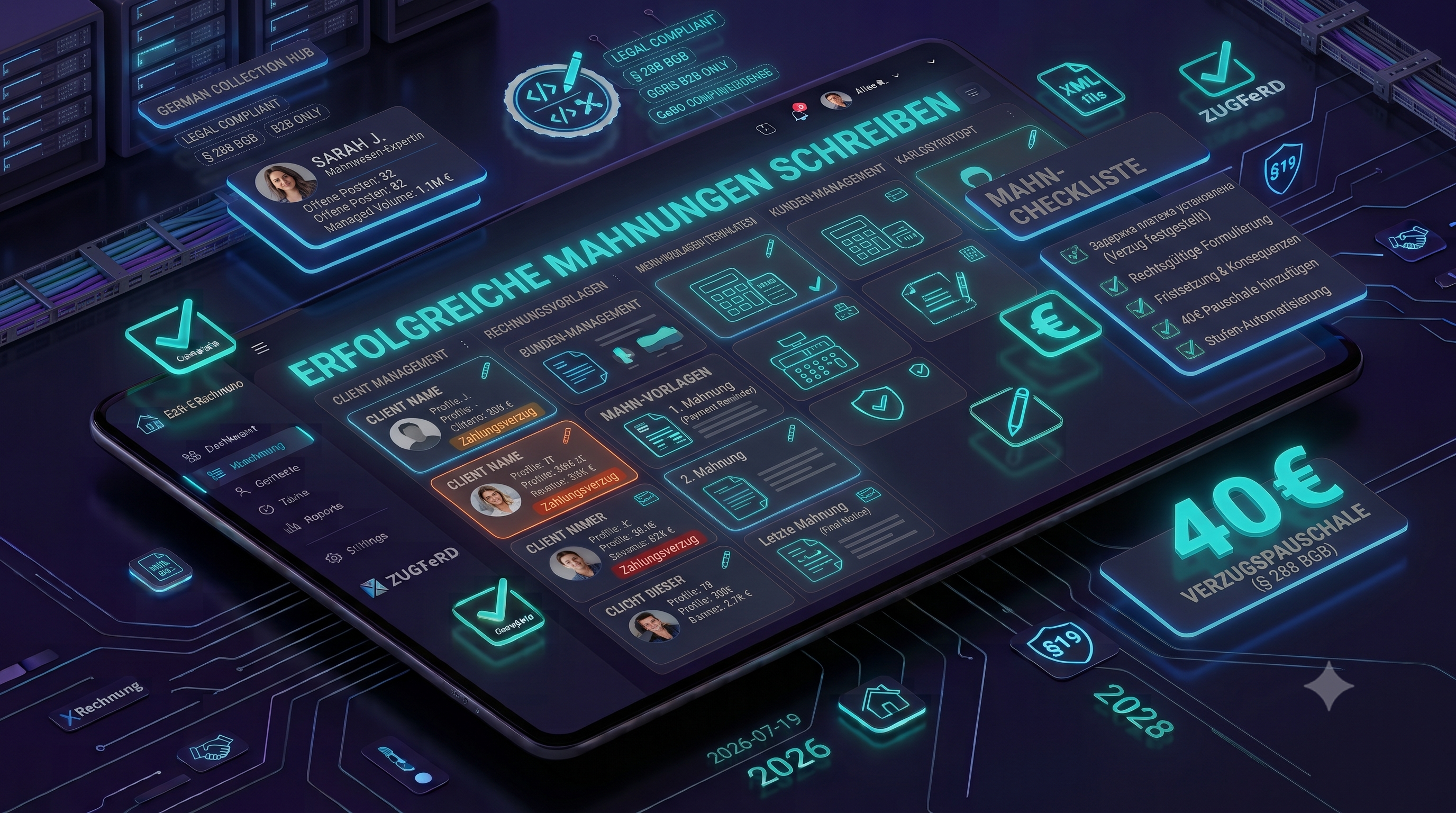
- Flat Late Fee (Verzugspauschale): Exactly €40.00. This is your strongest B2B tool! As soon as a corporate client is in default, you have the legal right to charge this €40 fee immediately, regardless of the invoice amount.
4. Mandatory Elements in a Mahnung
To be legally binding, your reminder must include:
- Reference to the original invoice (Number and Date).
- Total debt breakdown (Original amount + fees/interest).
- A specific new deadline (exact calendar date, e.g., "by July 26, 2026").
- Your bank details (IBAN).
Tip: If a client claims their system rejected your invoice due to XML errors, you can use our ZUGFeRD Validator to prove your file is 100% compliant with EN 16931. To set clear payment terms from the beginning, discover our invoice templates.
5. How to Automate Your Dunning Process with EasyRechnung
Managing unpaid invoices is fully transparent and automated with EasyRechnung:
- Automatic Overdue Tracking: Our "Overdue Checker" continuously monitors the payment deadlines of your sent invoices. Once default occurs, the invoice status automatically switches to
overdue. - 1-Click Reminder Builder: A "Create Payment Reminder" button appears next to overdue invoices (active for Pro and Business plans).
- Select the Level: Instantly switch between the three stages (Friendly Reminder, 1st Mahnung, Final Warning). The system automatically populates legally vetted German texts.
- Flexible Financial Options: With one click, add standard reminder fees (Mahngebühren) or apply the €40 B2B flat penalty. All totals are recalculated automatically.
- PDF Generation: The system generates a formal PDF document based on German accounting standards, ready to be sent to your client immediately.
Key Takeaways
- In B2B, clients are in default 30 days after receiving the invoice or after a specified date.
- Use the legal 40-Euro flat fee to discipline B2B debtors.
- Always state an exact calendar date for the new payment deadline.
- Automate the process using smart software to save time and secure your cash flow.