Invoicing as a Freiberufler in Germany: The Complete Guide
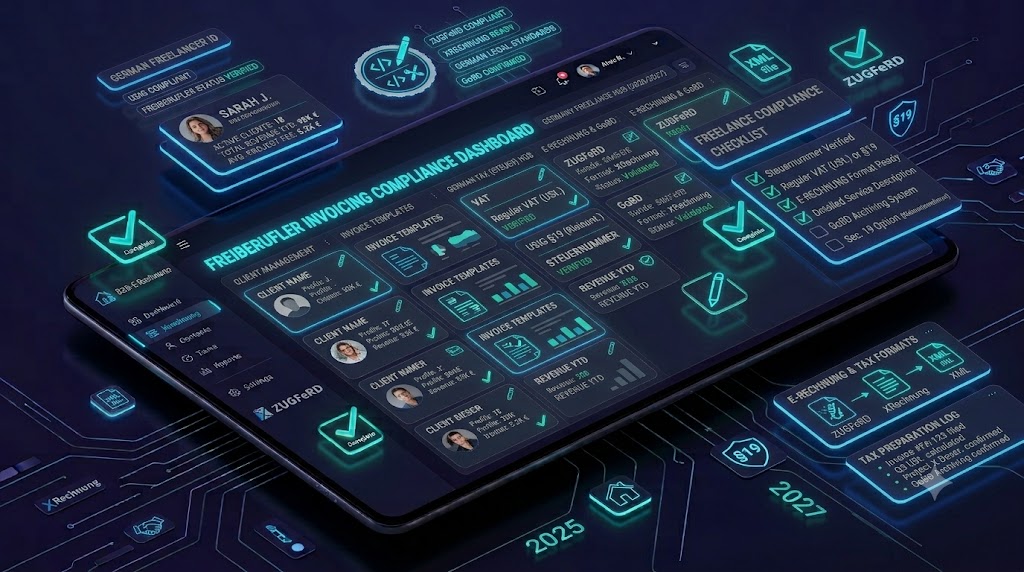
Working as a freelancer (Freiberufler) in Germany—such as an IT architect, designer, or consultant—comes with great perks: no trade tax (Gewerbesteuer), no commercial register requirements, and simplified accounting. However, when it comes to invoicing, the German tax office (Finanzamt) expects absolute perfection.
A flawed invoice can lead to delayed payments from clients and fines during tax audits. Furthermore, with the mandatory B2B e-invoicing laws fully active in 2026, simple PDF files are no longer sufficient. Here is how you can ensure your invoices are legally compliant and future-proof.
1. Mandatory Invoice Details (§ 14 UStG)
Every invoice you issue must contain the following information:
- Your full name and address.
- Client's full name/company name and address.
- Your Tax Number (Steuernummer) or VAT ID (USt-IdNr.).
- Invoice Date.
- Invoice Number: Must be unique and sequential.
- Service Period: When the work was completed.
- Detailed description of services.
- Amounts: Net amount, VAT rate (e.g., 19%), VAT amount, and Gross total.
To avoid formatting errors, we highly recommend you discover our invoice templates to build a solid foundation.
2. Describing Your Services Accurately
A common freelancer mistake is writing vague descriptions like "IT Services" or "Consulting". The tax office requires detailed transparency.
For example, if you are a web developer:
- ❌ Wrong: "IT Services for August"
- ✅ Right: "Frontend Architecture Development (React, Next.js), 40 hours"
- ❌ Wrong: "Website creation"
- ✅ Right: "Backend API Development with Node.js & PostgreSQL, Milestone 1"
Clear descriptions lead to fewer questions from your client's accounting department and faster payouts.
3. The 2026 E-Invoicing Reality for Freelancers
With the e-invoicing laws (Wachstumschancengesetz) enacted in 2025, the B2B landscape has changed. While micro-businesses have a grace period for sending XML files legally, corporate clients and agencies already demand structured digital invoices (ZUGFeRD or XRechnung) today.
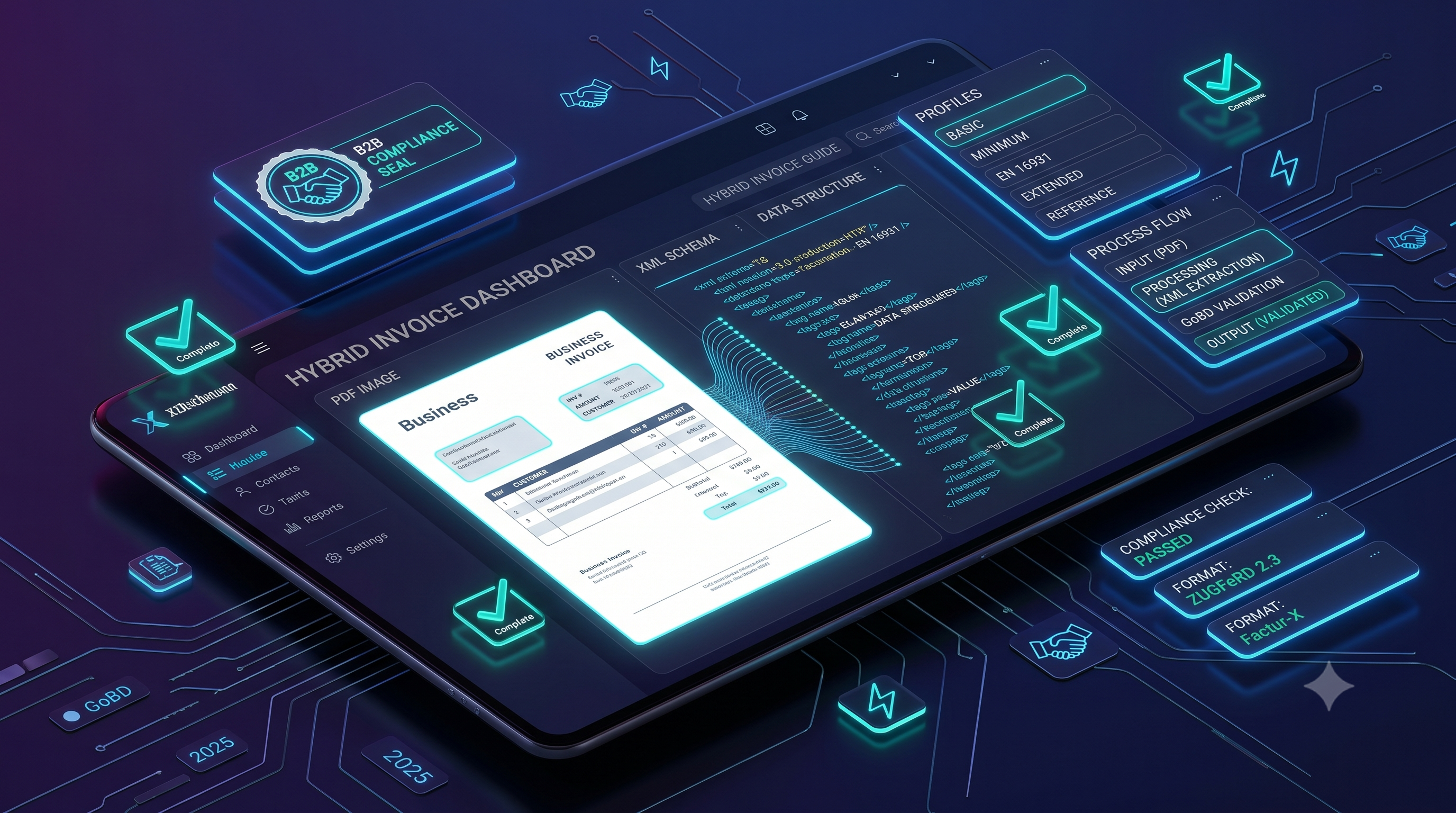
You don't need to be an XML expert to comply. You can seamlessly create an e-invoice on our platform. The system will convert your billing data into the required European standard (EN 16931). If you generate hybrid invoices (PDF/A-3) from your own software, always ensure they are error-free. You can use our ZUGFeRD Validator to instantly check for compliance before sending them to your clients.
Key Takeaways
- Be precise: Always include your Steuernummer and sequential invoice numbers.
- Be detailed: Describe your tech stack or specific tasks clearly.
- Go digital: Stop sending regular PDFs. Embrace structured e-invoices to get paid faster by B2B clients in 2026.